Tokyo: Ancient Script Calligraphy with a PhD Calligrapher
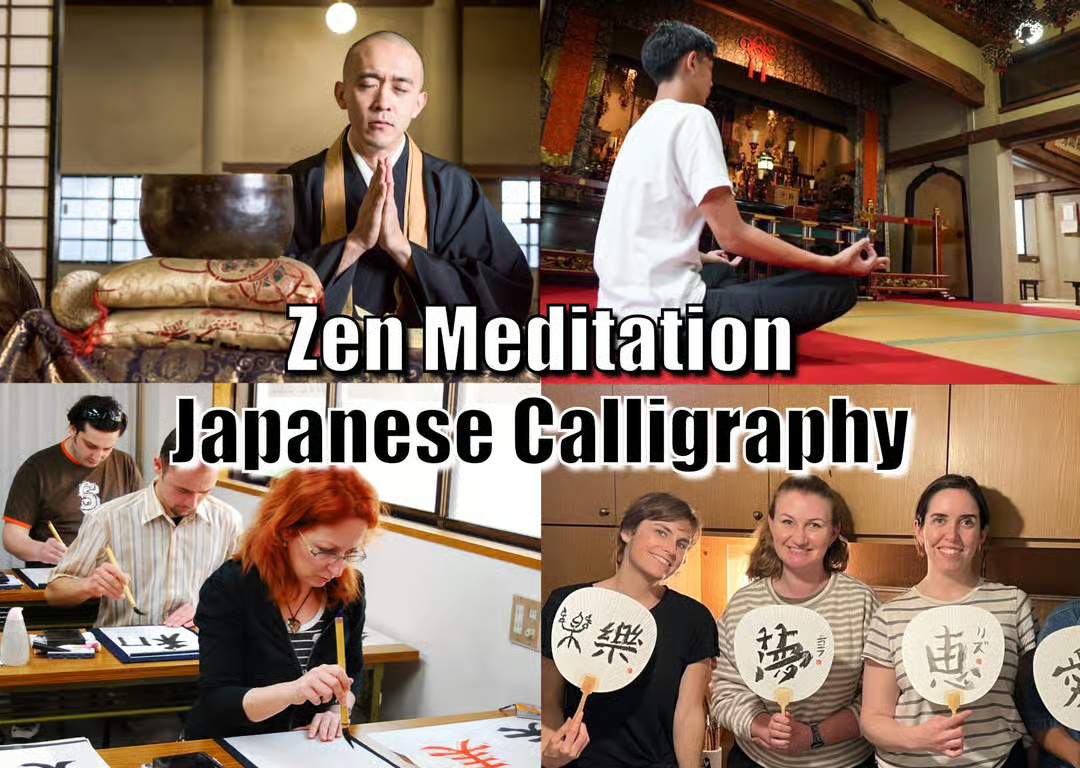
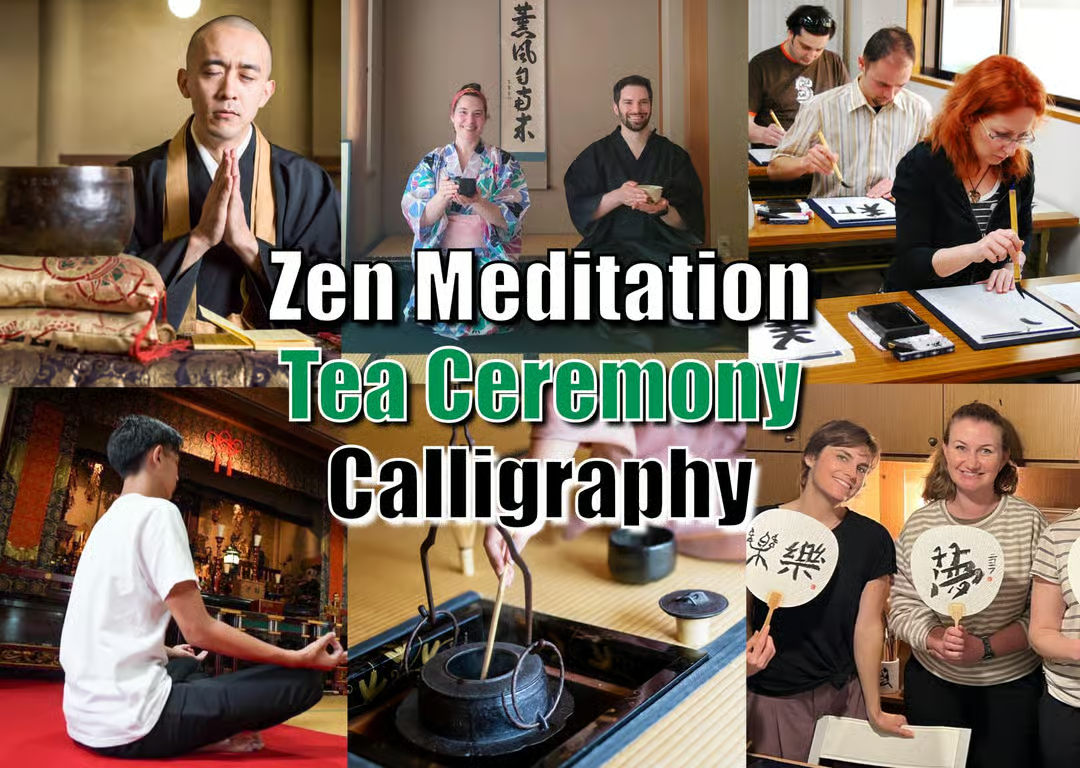
Explore Japanese calligraphy with Fugaku Watanabe, who holds a PhD in Calligraphy Studies. Discover ancient character forms, practice brush techniques, and create artwork to take home.
About this activity
- Duration
- 1 hour
- Areas Visited
- Tokyo
- Languages
- Japanese, English
- Group size
- 1–12 participants
- Confirmation
- Confirmation after request
- Free Cancellation
- Cancel up to 24 hours before the activity for a full refund.
Accessibility and additional details
- Difficulty Level
- Easy
- Stroller Accessible
- Yes
Highlights
- Learn directly from Fugaku Watanabe, who holds a PhD in Calligraphy Studies
- Discover how ancient character forms developed into kanji used in later Japanese calligraphy
- Try historical script styles such as seal script with expert cultural explanation
- Practice traditional brushwork and receive individual guidance on your chosen character
- Create a personal calligraphy piece on a shikishi board or fan to take home
Description
Discover Japanese calligraphy through the history hidden inside the characters themselves.
This private one-hour workshop in Roppongi is led by calligrapher Fugaku Watanabe, who earned a doctorate in Calligraphy Studies from Daito Bunka University and specializes in the study and artistic expression of ancient character forms.
Rather than simply copying a modern kanji, explore how Chinese characters changed over centuries and how ancient scripts such as seal script became part of the calligraphic tradition practiced in Japan.
Learn basic brush technique, examine older character forms, choose a character with personal meaning, and create your own calligraphy piece to take home.
Meet a calligrapher with a doctorate in the field
Your instructor, Fugaku Watanabe, began practicing calligraphy as a child and later studied at Daito Bunka University.
In 2019, he completed a doctorate in Calligraphy Studies with research focusing on historical bronze-inscription calligraphy. He currently teaches calligraphy, exhibits professionally, and runs calligraphy schools including his Roppongi studio.
This academic background is what makes the workshop different from a standard tourist calligraphy class.
Begin with brush and ink
Start with the fundamentals of Japanese calligraphy.
Learn how to:
Hold the brush
Control its angle
Adjust pressure
Begin and finish strokes
Use black ink
Balance the character on the page
The purpose is not to reproduce a computer font perfectly.
Calligraphy uses movement, pressure, rhythm, ink, and space to give written characters visual expression.
Discover older forms of kanji
Next, explore how familiar characters looked in older writing systems.
Historical calligraphy includes several major script styles, including seal script, clerical script, cursive script, semi-cursive script, and standard script. These forms continued to be studied and practiced in Japan, and historical Japanese educational materials also used the five styles together.
Depending on the confirmed Alva program, your instructor may introduce styles such as:
Tensho — seal script
Reisho — clerical script
Kinbun — inscriptions associated with ancient bronze vessels
The exact scripts included should follow the instructor’s confirmed lesson plan.
Understand where the ancient forms came from
Avoid the idea that these scripts originated in ancient Japan.
Kanji developed from Chinese writing traditions and were later adopted and transformed within Japanese language and culture.
Your instructor will help you see how the shape of a character changed over time and how an ancient form can reveal visual ideas that are less obvious in its modern version.
Look at bronze-inscription forms
One particularly relevant area is kinbun.
Bronze inscriptions refer to characters cast or engraved on ancient Chinese bronze objects.
Fugaku Watanabe’s doctoral research centers on historical bronze inscriptions and their reproduction through calligraphy, making this an especially distinctive subject within his work.
If kinbun is included in every Alva session, this should become one of the headline features of the tour.
Choose a character
Select a character you would like to explore.
Possible examples may include concepts such as:
Dream
Harmony
Love
Fortune
Journey
Strength
The instructor can explain the meaning and show how the character changes between modern and older forms when an appropriate historical form exists.
Do not guarantee that every requested English word can be translated into one perfect kanji.
Practice before making the final piece
Try the character several times on practice paper.
Your instructor can demonstrate the stroke order, movement, proportions, ink amount, and spacing.
Corrections may be shown directly on the practice sheet according to the instructor’s teaching method.
The current Alva listing promises traditional red-ink correction, so this should remain only if red-ink feedback is part of every standard session.
Create your final artwork
Once you become comfortable with the brush, create your final calligraphy piece.
Fugaku Calligraphy Studio’s public international program currently offers artwork production on either colored calligraphy board or an uchiwa fan.
For the Alva experience, confirm whether guests always choose between:
Shikishi board
Uchiwa fan
or whether the format changes by session.
Take your work home
Your finished physical artwork becomes your souvenir from the class.
Instead of purchasing a piece of calligraphy made by somebody else, you leave with a character you selected and wrote yourself.
See calligraphy as both language and art
Japanese calligraphy is not simply handwriting practice.
The same character can look very different depending on script style, brush pressure, line quality, spacing, ink, and the calligrapher’s interpretation.
The workshop is designed to show this connection between:
character → history → brush movement → visual art
within one short experience.
Included
What's Included
- Instructor with a doctorate in Calligraphy Studies
- English-speaking interpreter or assistant when required
- Individual brush practice
- Calligraphy brushes
- Black ink
- Practice paper
- Final artwork material
- Shikishi board or uchiwa fan according to the confirmed program
- Individual instructor feedback
- Personal artwork to take home
What's Not Included
- Hotel pickup and drop-off
- Food and drinks
- Personal expenses
- Gratuities
What you'll experience
Meet a Calligrapher and Learn the Brush Basics
Meet Fugaku Watanabe, learn about Japanese calligraphy and its tools, and watch a short demonstration of brush handling, pressure, and line movement.
See How Characters Changed Through History
Compare modern kanji with older character forms and learn about historical scripts such as seal script and, when included in the session, bronze inscriptions or clerical script.
Practice Your Character
Choose a meaningful character and practice its brushstrokes with individual instruction on balance, movement, pressure, and form.
Create Your Own Calligraphy Piece
Use what you learned to create a final work on the material included in your session, such as a shikishi board or uchiwa fan.
Finish and Take Your Artwork Home
Receive final feedback, take photos where permitted, and leave with the calligraphy piece you created.
Meeting Point
Meet a Calligrapher and Learn the Brush Basics
Roppongi Annex, 6-chōme-7 Roppongi, Minato City, Tokyo 106-0032, Japan
Meet Fugaku Watanabe, learn about Japanese calligraphy and its tools, and watch a short demonstration of brush handling, pressure, and line movement.
Important Information
- No previous calligraphy experience is required.
- All essential tools for the confirmed workshop are provided.
- Black ink may permanently stain clothing, so casual clothing is recommended.
- Children must be supervised.
Pricing
Prices by participant and group size
| Participant | All group sizes |
|---|---|
| Adults | ¥7,500 |
| Infants | ¥0 |
Price is charged per participant. The total is calculated by multiplying the unit price by the number of participants.
Free Cancellation
Cancel up to 24 hours before the activity for a full refund.
Cancellation Timeline
Reviews
Questions & Answers
No questions yet. Be the first to ask!