About this activity
- Duration
- 1 hour
- Areas Visited
- Tokyo
- Languages
- Japanese, English
- Group size
- 1–8 participants
- Confirmation
- Instant Confirmation
- Free Cancellation
- Cancel up to 24 hours before the activity for a full refund.
Accessibility and additional details
- Required Fitness Level
- Low — Suitable for all ages
- Wheelchair Accessible
- Yes
- Stroller Accessible
- Yes
Highlights
- Walk beneath the famous 146-tree ginkgo avenue at Meiji Jingu Gaien
- Learn how the 1923 landscape was designed using carefully planned perspective
- Discover why the trees have their distinctive tall and tapered appearance
- Get casual photo support and find different angles for capturing the autumn scenery
- Enjoy a quick one-hour seasonal experience in central Tokyo with a local guide
Description
Experience one of Tokyo’s most recognizable autumn scenes on a short guided walk through Meiji Jingu Gaien’s famous Ginkgo Avenue.
Rather than simply arriving, taking a photograph, and leaving, discover why the avenue looks the way it does.
The 300-meter avenue was created in 1923 using 146 carefully selected ginkgo trees. Their height and position were deliberately arranged to create a dramatic perspective toward the Meiji Memorial Picture Gallery.
Walk beneath the trees with a local guide, learn about their history and design, find photogenic viewpoints, and enjoy one of Tokyo’s classic seasonal landscapes.
Meet near Aoyama-itchome
Meet your guide outside Aoyama-itchome Station Exit 1.
From here, walk toward Meiji Jingu Gaien and the beginning of the ginkgo-lined avenue.
Please note that Meiji Jingu Gaien is different from Meiji Jingu Shrine near Harajuku.
This tour takes place at the Outer Garden area near Aoyama and Gaienmae.
See 146 historic ginkgo trees
The avenue was completed in 1923.
The ginkgo trees originated from seeds collected in 1908 from an existing tree in Shinjuku Gyoen.
Around 1,600 young trees were raised before 146 were selected for the avenue.
Rather than being planted randomly, the trees were chosen and positioned as part of a carefully planned landscape.
Discover the hidden perspective
One of the most interesting details is easy to miss if you visit alone.
The trees were arranged by height along the gently changing ground level so that the Meiji Memorial Picture Gallery appears more impressive in the distance.
The official Meiji Jingu Gaien description specifically explains that perspective was used as part of the avenue’s landscape design.
Your guide will show you where to look so that the relationship between the trees, road, and distant building becomes easier to see.
Learn why ginkgo was chosen
The trees are regularly shaped into the distinctive tall, tapered forms visible along the avenue.
According to Meiji Jingu Gaien, ginkgo was valued for its elegant shape, abundant greenery, and resistance to urban pollution.
The trees are periodically pruned during the leafless winter season to maintain their characteristic form.
Experience Tokyo in autumn
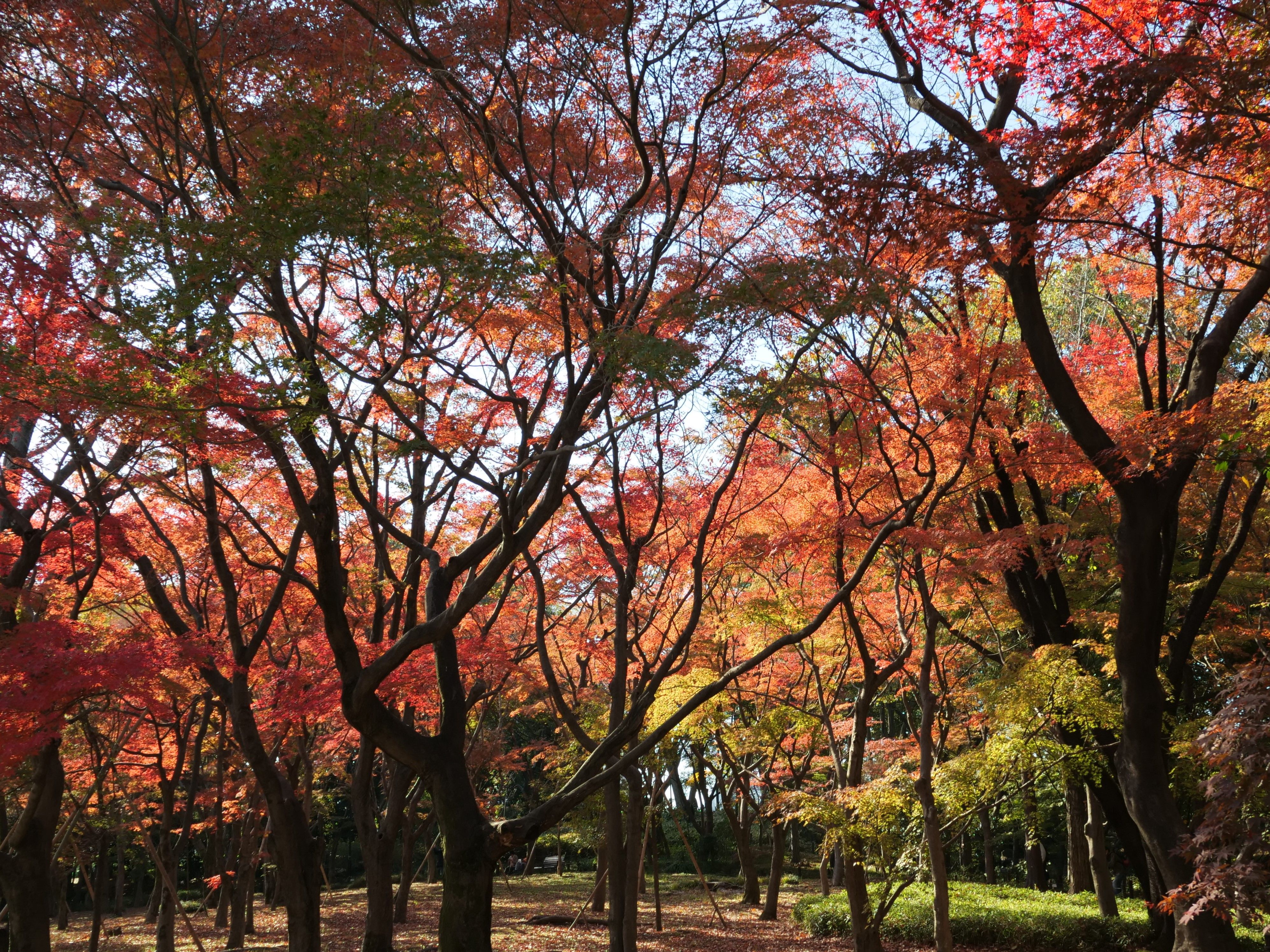
During autumn, the fan-shaped leaves gradually change from green to yellow before falling.
November is generally one of the best months to see the ginkgo rows at Meiji Jingu Gaien, and the avenue is one of Tokyo’s best-known seasonal photo locations.
However, autumn foliage is a natural phenomenon.
The exact color and amount of foliage depends on temperature, rain, wind, and the timing of your visit.
Find different photo perspectives
Your guide can help you find several ways to photograph the avenue.
Depending on crowds and conditions, these may include:
Long symmetrical views toward the Picture Gallery
Close-up photographs beneath the yellow leaves
Portraits with the tree rows in the background
Fallen leaves along permitted pedestrian areas
Details of the fan-shaped ginkgo leaves
Photo assistance is casual and uses your own smartphone or camera.
This is not a professional photography session.
Photography without blocking the avenue
Peak autumn weekends can become extremely crowded.
Your guide will prioritize pedestrian safety and local rules rather than attempting to create an empty background.
Guests must remain in permitted pedestrian areas and must not stand in active traffic lanes for photographs.
Learn the story behind the trees
The landscape was designed by Yoshinobu Orishimo, a leading figure in modern Japanese landscape architecture who served as the chief landscape engineer during development of Meiji Jingu Gaien.
Learning this story changes the avenue from a seasonal Instagram location into an example of early modern Japanese urban landscape design.
Finish near the avenue
The tour finishes around the Meiji Jingu Gaien Ginkgo Avenue area.
After the guided walk, you are free to continue taking photographs or explore nearby Aoyama and Gaienmae independently.
Included
What's Included
- English- or Japanese-speaking local guide
- Guided walk at Meiji Jingu Gaien
- Casual photography assistance using your own phone or camera
What's Not Included
- Professional photography
- Food and drinks
- Transportation to and from the meeting point
- Personal expenses
- Gratuities
Meeting Point
Meet Your Guide and Discover the Story of Gaien
Aoyama-Itchome Station, Minato City, Tokyo, Japan
Meet at Aoyama-itchome Station and walk toward Meiji Jingu Gaien while learning why the Outer Garden is different from Meiji Jingu Shrine in Harajuku.
Itinerary
- Visit 40min
Walk Beneath Tokyo’s Famous Ginkgo Trees
Stroll along the 300-meter avenue, learn how its 146 trees were selected and arranged, discover the landscape’s perspective design, and stop at suitable viewpoints for photos.
- Visit 10min
Capture the Season and Continue Exploring
Finish with additional photos when conditions allow and receive recommendations for nearby places to visit after the tour.
Important Information
- Autumn foliage is a natural phenomenon and the exact color of the ginkgo trees cannot be guaranteed.
- Depending on your visit date, leaves may be green, partly yellow, fully golden, falling, or already gone.
- Rain, wind, and temperature can change foliage conditions quickly.
- The tour operates even when the trees are not at peak color unless otherwise stated.
- Peak autumn periods can be extremely crowded.
- Event and illumination dates may change from year to year.
- Children must remain supervised, particularly near roads and crowded pedestrian areas.
Pricing
Prices by participant and group size
| Participant | All group sizes |
|---|---|
| Adults (Ages 13-99) | ¥4,000 |
| Children (Ages 2-12) | ¥3,500 |
| Infants (Ages 0-1) | ¥0 |
Price is charged per participant. The total is calculated by multiplying the unit price by the number of participants.
Free Cancellation
Cancel up to 24 hours before the activity for a full refund.
Cancellation Timeline
Reviews
Questions & Answers
No questions yet. Be the first to ask!