About this activity
- Duration
- 1 hour
- Areas Visited
- Tokyo
- Languages
- Japanese, English
- Group size
- 1–8 participants
- Confirmation
- Instant Confirmation
- Free Cancellation
- Cancel up to 24 hours before the activity for a full refund.
Accessibility and additional details
- Required Fitness Level
- Moderate — Some walking required
- Wheelchair Accessible
- Yes
- Stroller Accessible
- Yes
Highlights
- Enter Kitanomaru Park through Tayasumon, a surviving gate of former Edo Castle
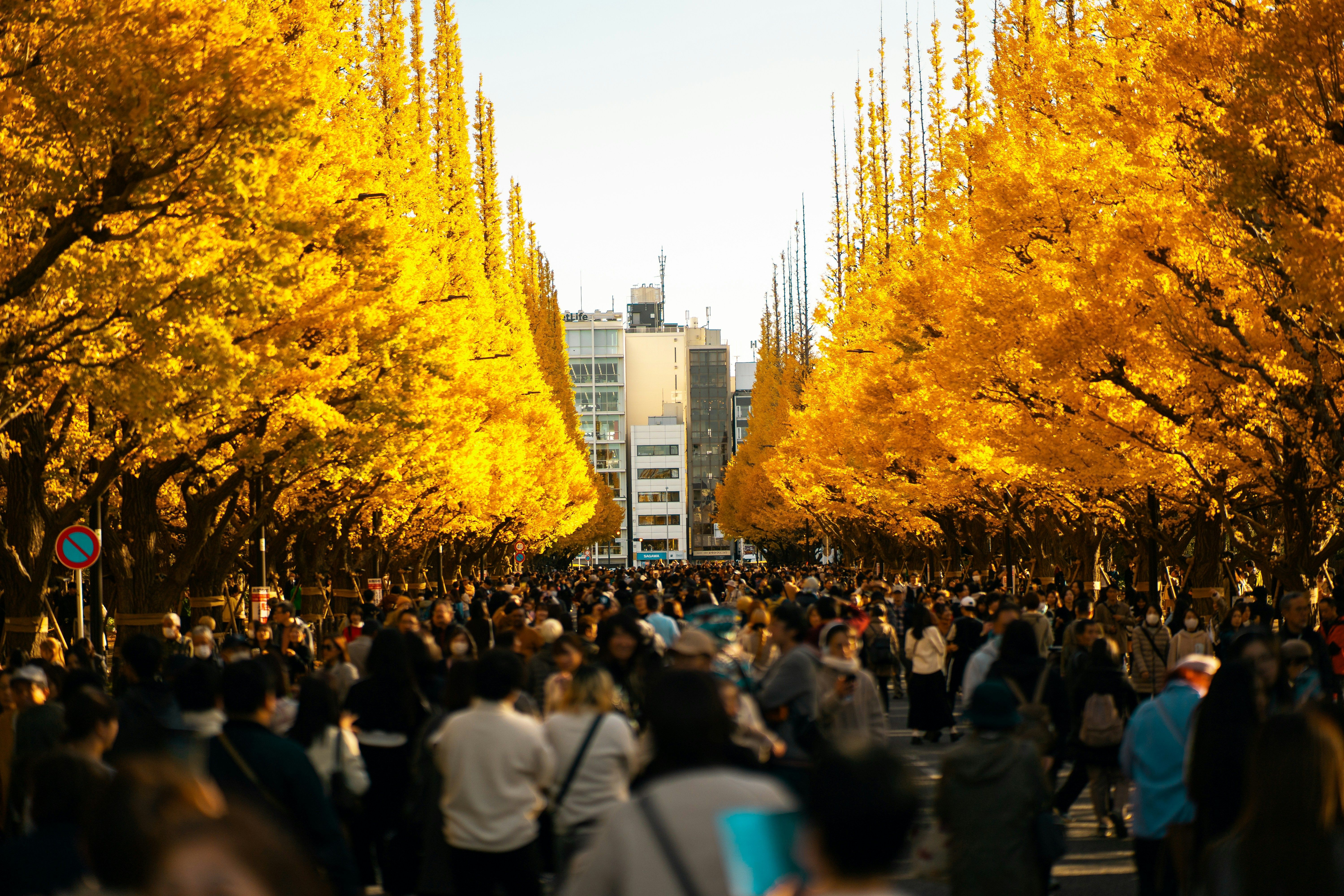
- Enjoy red maples, golden ginkgo trees, and woodland scenery in central Tokyo
- Learn how the former castle grounds became today’s Kitanomaru Park
- See historic stone walls and gates alongside the iconic Nippon Budokan
- Get casual photo support while enjoying a short one-hour autumn walk
Description
Experience autumn colors and Edo-period history together on a one-hour walk through Kitanomaru Park beside the Imperial Palace.
Once part of Edo Castle’s northern compound, the park still preserves historic gates, stone walls, and moats alongside woodland paths, a pond, maple trees, ginkgo trees, and the iconic Nippon Budokan.
Begin at Tayasumon Gate, one of the oldest surviving structures of Edo Castle, then walk through the park while discovering how the area changed from samurai-era castle grounds into a modern public park.
In autumn, maples, ginkgo trees, zelkova, and other deciduous trees bring layers of red, orange, and yellow to the landscape.
Enter through a surviving Edo Castle gate
Meet your guide at Kudanshita Station and walk toward Tayasumon Gate.
The present gate dates to 1636 and is the oldest surviving gate structure of former Edo Castle.
Together with Shimizumon Gate, it has been designated an Important Cultural Property of Japan.
Rather than entering an ordinary city park, you begin by physically passing through part of the old castle defenses.
Discover the former Kitanomaru of Edo Castle
During the Edo period, the Kitanomaru area was occupied by members of the extended Tokugawa family.
After later serving other purposes, the grounds were developed as a public park and opened in 1969.
Your guide will explain how traces of the castle coexist with the landscape you see today.
See the Nippon Budokan
Soon after entering the park, see the distinctive Nippon Budokan from outside.
Today it is known both for Japanese martial arts and major concerts and events.
This tour does not enter the building.
Instead, the Budokan helps show how Kitanomaru evolved from a feudal castle district into one of central Tokyo’s major cultural spaces.
Walk into a wooded side of central Tokyo
Continue away from the busiest entrance and into the greener areas of Kitanomaru Park.
The Ministry of the Environment describes the park as a woodland landscape centered around open lawns and a pond, with deciduous trees and flowering plants around the central area.
The atmosphere changes quickly from the streets around Kudanshita.
Look for red maples and golden ginkgo
The park offers more variety than a single-species autumn avenue.
Japanese maples can turn deep red and orange, while large ginkgo trees around the pond create bright yellow autumn scenery.
JNTO specifically highlights Momiji-yama on the western side of the park and large ginkgo trees around the pond, with ginkgo color typically appearing from late November into early December.
See autumn beside the water
Walk around the pond and small waterways where conditions allow.
Depending on light, wind, and foliage, the water can add another layer to photographs of the surrounding trees.
Reflections are a natural effect and cannot be guaranteed.
Learn to notice more than leaf color
Your guide will help you look at how the park is composed:
Woodland
Open lawn
Pond
Historic walls
Moats
Gates
Modern cultural buildings
This combination is what makes Kitanomaru different from a dedicated Japanese garden.
Take casual seasonal photos
When conditions allow, your guide can help take photographs using your own phone or camera.
Possible backgrounds include:
Red maple leaves
Yellow ginkgo trees
Woodland paths
Stone walls
Tayasumon Gate
The pond
This is casual photo assistance, not a professional photoshoot.
Finish with another Edo Castle gate
When route conditions and guest mobility allow, continue toward Shimizumon Gate.
The current gate was rebuilt in 1658 and, like Tayasumon, is designated an Important Cultural Property.
Its steep stone staircase, known as Gangi-zaka, was intentionally difficult to climb and remains challenging today.
Guests who prefer not to use the stone steps can finish via an easier alternative route.
Continue exploring central Tokyo
The tour finishes around Kitanomaru Park.
From here, you can continue toward Takebashi, the Imperial Palace area, Chidorigafuchi, or nearby museums depending on your plans.
Included
What's Included
- English- or Japanese-speaking local guide
- Casual photo assistance using your own phone or camera
What's Not Included
- Professional photography
- Food and drinks
- Personal expenses
- Gratuities
Meeting Point
Enter Through Former Edo Castle
Kudanshita Station, 1-chōme-13-19 Kudankita, Chiyoda City, Tokyo 102-0073, Japan
Meet at Kudanshita Station and walk to Tayasumon Gate. Learn why the 1636 gate is historically important before entering the former northern compound of Edo Castle.
Itinerary
- Visit 10min
From Castle Grounds to Modern Tokyo
Pass the Nippon Budokan and learn how the Kitanomaru area evolved from Tokugawa-era castle grounds into a modern public park and cultural district.
- Visit 25min
Walk Through Autumn Colors
Explore the greener heart of the park and look for seasonal reds, oranges, and yellows among Japanese maples, ginkgo trees, and other deciduous species.
- Visit 10min
Finish with Another Edo Castle Landmark
When conditions allow, finish near historic Shimizumon Gate. Guests who cannot comfortably use its steep stone steps will take an alternative park route.
Important Information
- Autumn foliage is a natural phenomenon and peak colors cannot be guaranteed.
- Depending on your date, foliage may still be green, partially colored, at peak, falling, or already gone.
- Late November to early December is generally a strong period for autumn color in Kitanomaru Park, but yearly conditions vary.
- Concerts, martial-arts events, or other activities at Nippon Budokan may increase crowds around the park.
- The exact route may change because of weather, foliage conditions, construction, events, or temporary access restrictions.
- Photography is casual and uses your own phone or camera.
Pricing
Prices by participant and group size
| Participant | All group sizes |
|---|---|
| Adults (Ages 7-99) | ¥4,000 |
| Children (Ages 2-6) | ¥3,500 |
| Infants (Ages 0-1) | ¥0 |
Price is charged per participant. The total is calculated by multiplying the unit price by the number of participants.
Free Cancellation
Cancel up to 24 hours before the activity for a full refund.
Cancellation Timeline
Reviews
Questions & Answers
No questions yet. Be the first to ask!